


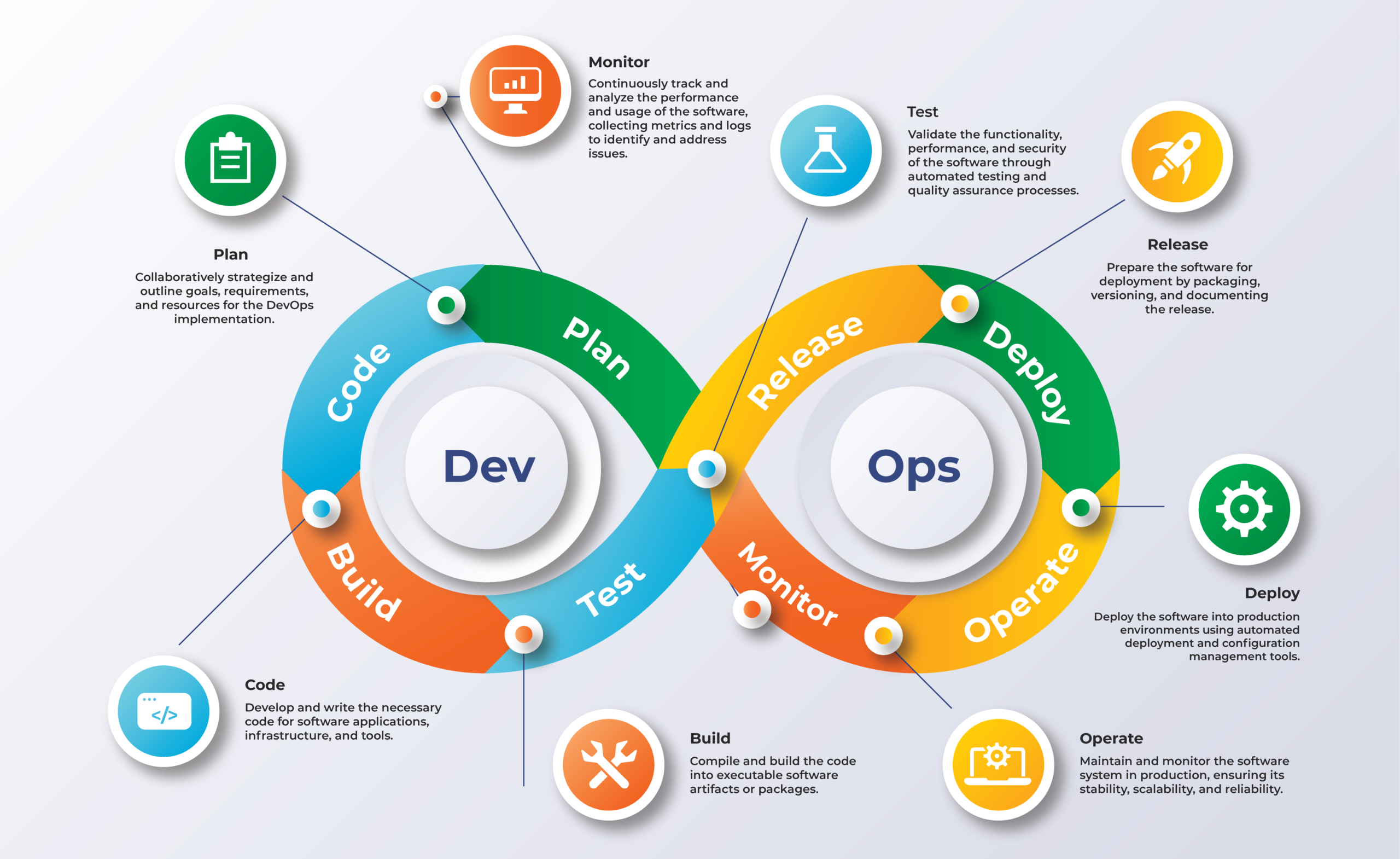
The benefits of DevOps have transformed the way organizations develop, deploy, and manage software applications. By combining development and operations into a unified workflow, DevOps improves collaboration, accelerates delivery, increases system reliability, and enhances overall business performance. Companies adopting DevOps practices gain a competitive edge through automation, continuous integration, faster releases, and better customer experiences
Introduction
In today’s highly competitive digital environment, organizations are under constant pressure to deliver software applications faster while maintaining high quality and reliability. Traditional software development methods often create barriers between development teams and IT operations, leading to communication gaps, slower releases, and frequent deployment failures. This is where DevOps emerges as a revolutionary approach that bridges the gap between development and operations teams to streamline the entire software delivery lifecycle
The benefits of DevOps extend beyond faster software deployment. DevOps enhances collaboration, boosts productivity, improves security, reduces operational costs, and increases customer satisfaction. Organizations across industries, including healthcare, finance, e-commerce, education, and technology, are rapidly adopting DevOps practices to stay agile and competitive in a fast-changing market
DevOps is not just a set of tools or technologies. It is a cultural and operational philosophy focused on automation, communication, continuous integration, continuous delivery, and continuous improvement. Businesses that embrace DevOps can deliver innovative products faster, respond quickly to customer demands, and maintain stable and secure systems with minimal downtime
This article explores the major benefits of DevOps, explaining how it improves business operations, software quality, scalability, security, and team collaboration while driving long-term organizational success
What is DevOps?
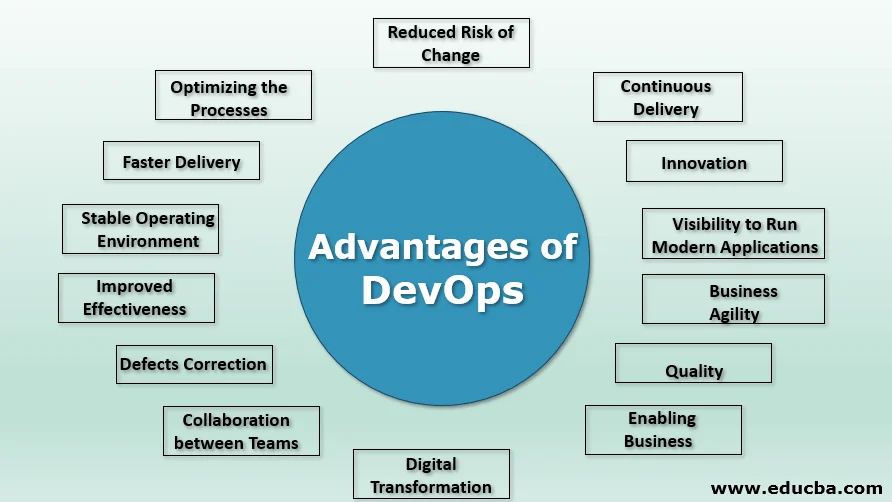
DevOps is a combination of two terms: development and operations. It represents a collaborative approach where software developers and IT operations teams work together throughout the software lifecycle. Instead of functioning as separate departments with conflicting priorities, DevOps encourages shared responsibilities and unified goals
The primary objective of DevOps is to automate and optimize software development processes, allowing organizations to release software updates rapidly and reliably. DevOps incorporates practices such as continuous integration, continuous delivery, infrastructure as code, automated testing, monitoring, and cloud computing
The adoption of DevOps helps organizations overcome traditional software development challenges by improving communication, reducing manual work, and enabling continuous innovation
Faster Software Delivery
One of the most important benefits of DevOps is faster software delivery. Traditional software development models often involve lengthy release cycles due to manual testing, isolated workflows, and poor coordination between teams. DevOps eliminates these inefficiencies by introducing automation and continuous delivery pipelines
With DevOps practices, developers can continuously integrate code changes into a shared repository where automated testing validates the code instantly. This enables organizations to identify and fix issues quickly before they become major problems
Continuous delivery ensures that software updates can be deployed to production rapidly and safely. Businesses can release new features, bug fixes, and security updates much faster compared to traditional methods. Faster deployment cycles help companies respond quickly to customer demands and market changes
Organizations using DevOps can achieve shorter development cycles, increased deployment frequency, and reduced time-to-market. This speed gives businesses a strong competitive advantage in industries where innovation and customer expectations evolve rapidly
Improved Collaboration Between Teams
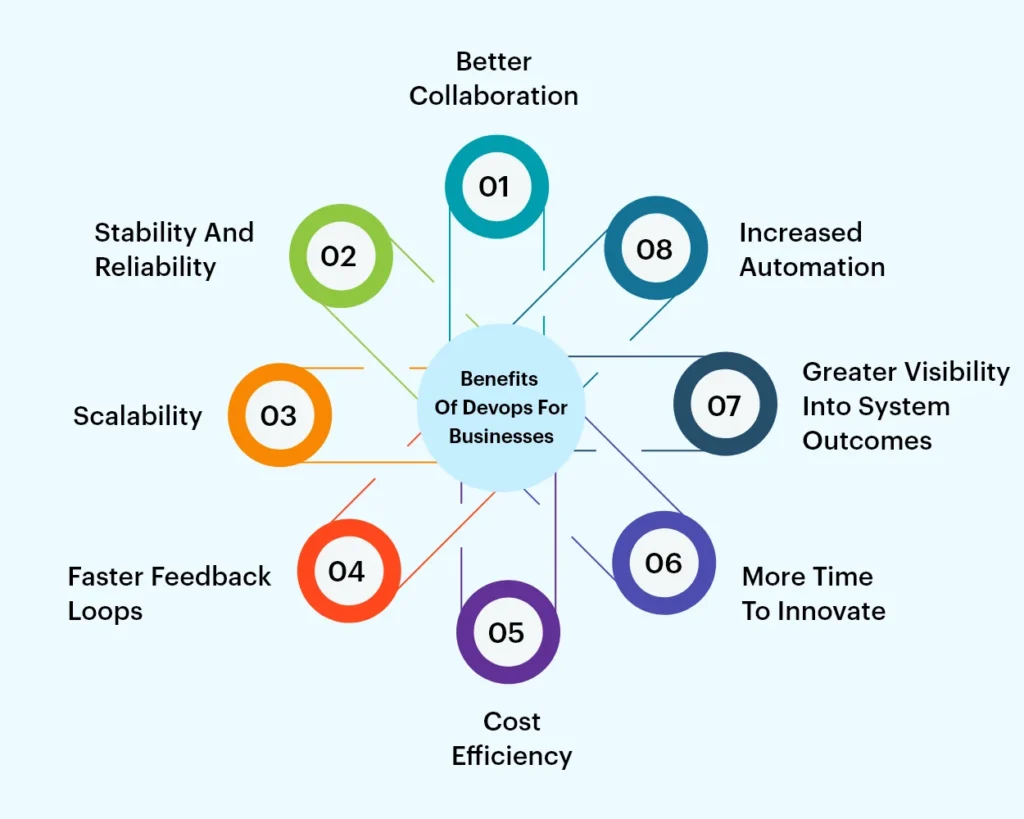
Traditional software development environments often create conflicts between developers and operations teams. Developers focus on building new features quickly, while operations teams prioritize system stability and reliability. This difference in priorities can lead to communication breakdowns and operational inefficiencies
A major advantage of DevOps is improved collaboration between teams. DevOps encourages shared ownership, transparency, and continuous communication throughout the software development lifecycle
Development, operations, testing, and security teams work together from the beginning of a project instead of functioning in isolated silos. This collaborative culture reduces misunderstandings, improves problem-solving, and creates a more efficient workflow
By fostering teamwork and shared accountability, DevOps helps organizations build a culture of trust and innovation. Employees become more aligned with business objectives, leading to higher productivity and better outcomes
Increased Automation
Automation is one of the core principles of DevOps and one of the biggest benefits of DevOps for organizations. Manual processes are time-consuming, error-prone, and inefficient. DevOps introduces automation across various stages of software development and IT operations
Automated testing allows teams to identify bugs and vulnerabilities quickly without requiring extensive manual intervention. Automated deployment pipelines streamline software releases, reducing delays and minimizing human errors
Infrastructure automation enables organizations to manage servers, databases, networks, and cloud resources more efficiently using infrastructure as code practices. This consistency improves reliability and scalability while reducing operational complexity
Automation also enhances productivity by allowing employees to focus on strategic and creative tasks instead of repetitive manual work. Businesses can achieve faster delivery, improved consistency, and greater operational efficiency through automation
Better Software Quality
Maintaining high software quality is essential for customer satisfaction and business reputation. One of the key benefits of DevOps is its ability to improve software quality through continuous testing and monitoring
In traditional development environments, testing often occurs late in the development process, making it difficult and costly to fix issues. DevOps integrates testing throughout the software lifecycle using automated testing tools and continuous integration pipelines
Developers receive immediate feedback when code changes introduce bugs or performance issues. This proactive approach allows teams to resolve problems early before they impact users
Continuous monitoring further improves software quality by providing real-time insights into system performance, application health, and user behavior. Organizations can quickly detect anomalies, prevent outages, and optimize application performance
As a result, businesses deliver more reliable, stable, and user-friendly applications that enhance customer trust and satisfaction
Faster Problem Resolution
Another important benefit of DevOps is faster problem detection and resolution. Traditional IT environments often struggle with slow incident response due to fragmented communication and manual troubleshooting processes
DevOps practices enable real-time monitoring, automated alerts, and centralized logging systems that help teams identify issues quickly. When problems occur, developers and operations teams collaborate closely to diagnose and resolve them efficiently
Automation also simplifies rollback procedures, allowing organizations to restore previous stable versions of software when necessary. This minimizes downtime and reduces the impact of technical failures on customers
Faster issue resolution improves system reliability and helps organizations maintain business continuity even during unexpected disruptions
Enhanced Scalability and Flexibility
Modern businesses require scalable systems that can adapt to changing workloads and customer demands. DevOps supports scalability through cloud computing, containerization, and infrastructure automation
One of the major benefits of DevOps is the ability to scale applications and infrastructure efficiently without significant manual effort. Infrastructure as code enables teams to provision and manage resources automatically based on demand
Cloud platforms integrated with DevOps practices allow organizations to scale services dynamically during peak usage periods and reduce resources during low-demand periods. This flexibility helps optimize costs while maintaining performance
Container technologies such as Docker and orchestration platforms like Kubernetes further improve scalability by enabling consistent deployment across multiple environments
Businesses adopting DevOps can quickly adapt to market changes, support growing user bases, and maintain high application availability
Improved Security and Compliance
Security is a critical concern for modern organizations, especially with increasing cyber threats and regulatory requirements. DevOps enhances security by integrating security practices directly into the development and deployment process
This approach, often referred to as DevSecOps, ensures that security is not treated as a separate phase but as a continuous process throughout the software lifecycle
Automated security testing tools scan code for vulnerabilities during development, allowing teams to fix issues early. Continuous monitoring helps detect suspicious activities and potential threats in real time
Infrastructure automation also improves compliance by maintaining consistent configurations and reducing the risk of human errors
The benefits of DevOps in security include faster vulnerability remediation, stronger compliance management, and improved protection against cyberattacks
Reduced Operational Costs
Operational efficiency is a major goal for businesses seeking long-term profitability. DevOps helps organizations reduce costs by automating repetitive tasks, improving resource utilization, and minimizing downtime
Traditional IT environments often require extensive manual intervention for deployments, maintenance, and infrastructure management. DevOps automation reduces the need for manual work, allowing organizations to optimize labor costs
Faster issue resolution and improved system reliability also reduce the financial impact of outages and service disruptions. Businesses can avoid costly downtime while improving customer satisfaction
Cloud-based DevOps environments enable organizations to pay only for the resources they use, further lowering infrastructure costs
By improving efficiency and reducing waste, DevOps contributes to significant cost savings across the organization
Continuous Innovation
Innovation is essential for businesses that want to remain competitive in the digital age. DevOps creates an environment where teams can experiment, iterate, and deliver new features rapidly
One of the greatest benefits of DevOps is its support for continuous innovation. Automated workflows and faster deployment cycles allow developers to test new ideas quickly and gather customer feedback in real time
Organizations can release updates incrementally instead of waiting for large-scale deployments. This agile approach reduces risk while encouraging innovation and creativity
Continuous integration and continuous delivery pipelines help businesses respond quickly to emerging trends, customer preferences, and technological advancements
Companies adopting DevOps are better positioned to innovate consistently and maintain a strong market presence
Improved Customer Satisfaction
Customer satisfaction is directly linked to software quality, performance, and reliability. DevOps improves customer experiences by enabling organizations to deliver better products faster
Frequent updates and rapid bug fixes ensure that customers receive new features and improvements without long delays. Continuous monitoring helps maintain high application performance and minimize downtime
The collaborative nature of DevOps also allows teams to respond more effectively to customer feedback and changing requirements
Businesses that leverage the benefits of DevOps can build stronger relationships with customers through reliable services, enhanced user experiences, and faster innovation
Higher Employee Productivity and Satisfaction
DevOps not only benefits organizations but also improves the work environment for employees. Traditional development and operations teams often experience stress due to manual processes, communication barriers, and deployment failures
DevOps automation reduces repetitive tasks, allowing employees to focus on meaningful and strategic work. Improved collaboration fosters a more positive and productive work culture
Shared responsibilities and transparent workflows help teams work more efficiently and reduce workplace conflicts
Employees in DevOps environments often experience greater job satisfaction because they can see the direct impact of their work on business success and customer satisfaction
Better Business Agility
Business agility is crucial in a rapidly changing market environment. Organizations need the ability to adapt quickly to new technologies, customer demands, and competitive pressures
DevOps enhances agility by streamlining development and operational processes. Faster release cycles allow businesses to respond quickly to opportunities and challenges
Automated workflows, scalable infrastructure, and continuous delivery pipelines enable organizations to launch new products and services with greater speed and flexibility
The benefits of DevOps in agility help businesses remain competitive and resilient in dynamic industries
Stronger Disaster Recovery and Reliability
System failures and unexpected outages can have serious consequences for businesses. DevOps improves disaster recovery capabilities through automation, monitoring, and infrastructure consistency
Automated backup and recovery processes ensure that organizations can restore systems quickly after disruptions. Infrastructure as code allows environments to be recreated rapidly and consistently
Continuous monitoring helps detect issues before they escalate into major incidents, reducing downtime and improving reliability
Organizations using DevOps can maintain business continuity more effectively and protect their reputation during technical failures
Competitive Advantage in the Market
Businesses that adopt DevOps often gain a significant competitive advantage. Faster innovation, improved quality, and enhanced customer experiences help organizations stand out in crowded markets
The ability to release products quickly and adapt to customer needs enables businesses to stay ahead of competitors
The benefits of DevOps empower organizations to improve operational efficiency, reduce risks, and accelerate growth in an increasingly digital economy
Challenges in Implementing DevOps
Although DevOps offers numerous advantages, organizations may face challenges during implementation. Cultural resistance, lack of skilled professionals, and outdated legacy systems can slow adoption
Successful DevOps transformation requires leadership support, employee training, and a commitment to continuous improvement
Organizations must invest in the right tools, processes, and cultural changes to fully realize the benefits of DevOps
Despite these challenges, the long-term rewards of DevOps far outweigh the initial difficulties
Conclusion
The benefits of DevOps have made it one of the most valuable approaches in modern software development and IT operations. By improving collaboration, automating workflows, enhancing security, and accelerating software delivery, DevOps enables organizations to achieve greater efficiency, innovation, and customer satisfaction
Businesses that embrace DevOps can respond more quickly to market demands, reduce operational costs, improve software quality, and maintain reliable systems. DevOps not only transforms technical processes but also creates a culture of teamwork, transparency, and continuous improvement
As digital transformation continues to reshape industries worldwide, DevOps will remain a critical strategy for organizations seeking long-term success and competitive advantage. Companies investing in DevOps practices today are positioning themselves for faster growth, stronger resilience, and a more innovative future
FAQs
1. What are the main benefits of DevOps?
The main benefits of DevOps include faster software delivery, improved collaboration, increased automation, better software quality, enhanced security, reduced operational costs, and improved customer satisfaction
2. How does DevOps improve software quality?
DevOps improves software quality through continuous integration, automated testing, real-time monitoring, and faster issue resolution, helping teams detect and fix problems early
3. Why is automation important in DevOps?
Automation reduces manual errors, accelerates deployment processes, improves efficiency, and allows teams to focus on strategic tasks instead of repetitive operations
4. Is DevOps suitable for small businesses?
Yes, DevOps is beneficial for businesses of all sizes. Small businesses can use DevOps practices to improve productivity, reduce costs, and deliver products faster
5. How does DevOps enhance security?
DevOps integrates security into the development process through automated security testing, continuous monitoring, and infrastructure consistency, helping organizations identify and address vulnerabilities quickly
You May Also Read
For more updates come back to our website newsatacker.blog
